
Interactive Design in Dubai and the Middle East: How Digital Experiences Are Redefining Brand Engagement


Across Dubai and the wider Middle East, digital experiences are rapidly evolving beyond traditional websites and mobile applications. Brands are increasingly investing in interactive design, immersive storytelling, and gamified experiences to create stronger emotional connections with audiences. As consumer expectations continue to rise, static digital platforms are giving way to dynamic environments that encourage exploration, participation, and engagement.
This shift is particularly visible in industries such as retail, luxury, tourism, real estate, and entertainment, where brands are seeking new ways to stand out in highly competitive markets. Interactive design has become a powerful tool for transforming digital touchpoints into memorable brand experiences.
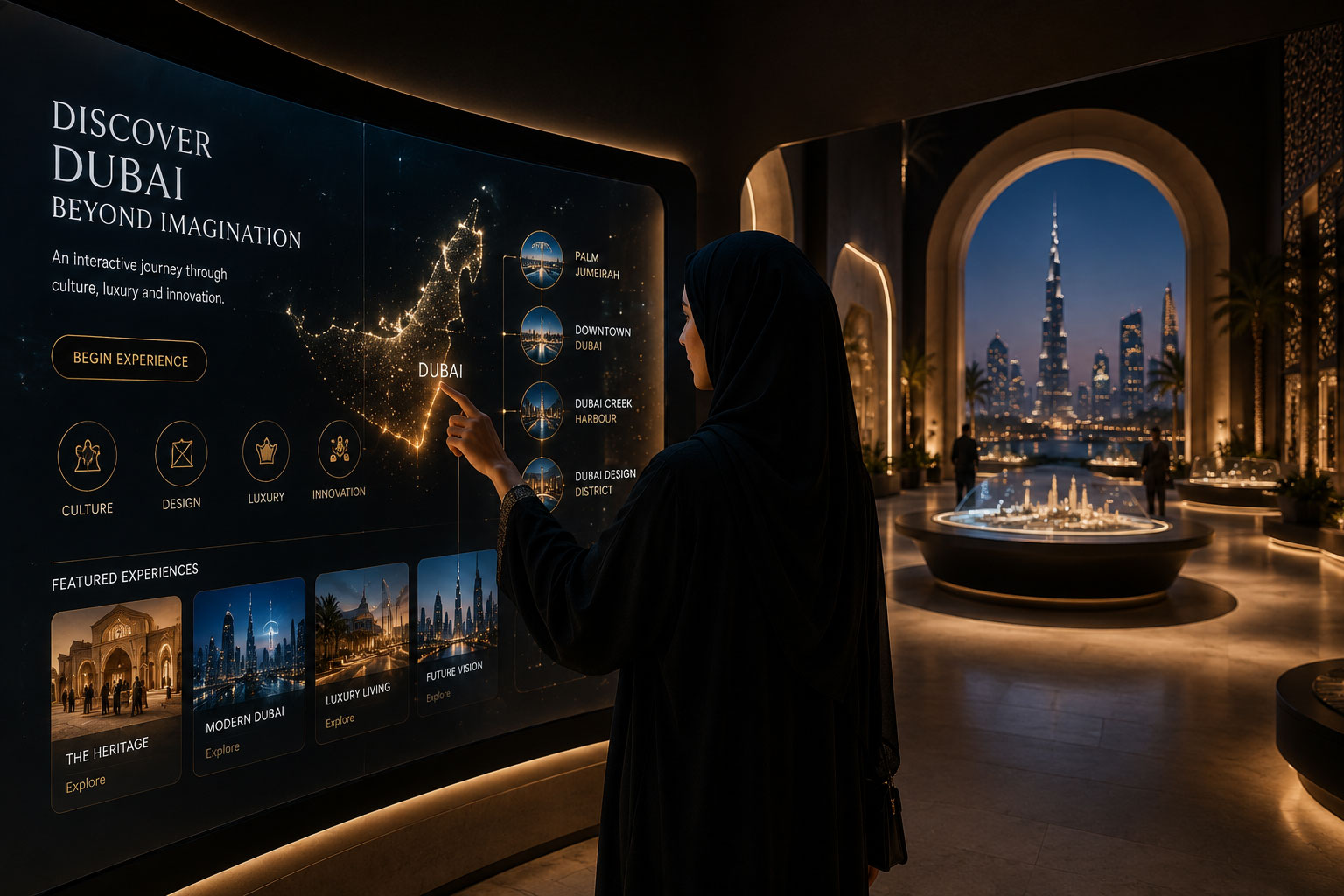
Why Interactive Design Matters Today
Consumers no longer want to simply browse information. They want to discover, interact, and participate. Modern audiences spend significant amounts of time on social media platforms, gaming environments, and immersive digital spaces where interaction is expected rather than optional.
As a result, businesses are adapting their digital presence to match these changing behaviors. Interactive experiences can increase engagement time, improve information retention, encourage social sharing, and strengthen brand recall.
For brands operating in Dubai and the GCC region, interactive design also provides an opportunity to blend technology with cultural storytelling, creating experiences that feel both innovative and locally relevant.
The Rise of Immersive Brand Experiences
One of the most significant developments in the region is the growth of immersive digital environments. Instead of presenting products through standard catalog pages, brands are building digital worlds where users can explore narratives, discover products organically, and interact with branded content.
These experiences often combine animation, motion design, 3D environments, sound, and user-driven storytelling. The result is a digital journey that feels closer to entertainment than traditional marketing.
Examples of immersive brand experiences can be seen in projects such as:
- Eidos Photography – An immersive 3D photography portfolio experience.
- Najwa Jewels – A gamified storytelling experience combining luxury branding with interactive exploration.
- QADIM Properties – An immersive cultural real estate experience inspired by ancient Mesopotamian heritage.
Gamification Is Becoming Mainstream
Gamification is no longer limited to mobile games or entertainment platforms. Today, businesses across the Middle East are adopting game mechanics to increase customer participation and improve user engagement.
Interactive challenges, reward systems, quizzes, progress tracking, digital collectibles, and branded mini-games are becoming common tools within marketing campaigns.
For retailers, gamification can encourage product discovery and increase conversion rates. For tourism organizations, it can create memorable destination experiences. For real estate developers, it can transform complex information into engaging and accessible journeys.
The growing popularity of gamification reflects a broader trend: users are more likely to engage with experiences that reward curiosity and participation.

Dubai's Position as a Regional Innovation Hub
Dubai has emerged as one of the leading cities for digital innovation and experiential marketing. The city's investment in technology, smart city initiatives, creative industries, and tourism has created an environment where brands are encouraged to experiment with new forms of digital engagement.
Luxury retail brands, hospitality groups, government organizations, and real estate developers are increasingly exploring interactive campaigns that combine storytelling, technology, and cultural relevance.
This environment makes Dubai a natural testing ground for immersive web experiences, interactive installations, AI-powered personalization, and gamified marketing strategies.
The Future of Interactive Design in the Middle East
The next generation of digital experiences will likely combine immersive design with artificial intelligence, personalized storytelling, real-time content adaptation, and advanced WebGL technologies.
Rather than delivering the same experience to every visitor, brands will increasingly create adaptive journeys that respond to individual preferences, behaviors, and interests.
As digital competition continues to increase across the region, interactive design will move from being a differentiator to becoming an expectation. Organizations that invest early in immersive and participatory experiences will be better positioned to capture attention, build stronger emotional connections, and create lasting brand value.
Conclusion
Interactive design is reshaping the digital landscape across Dubai and the Middle East. From immersive storytelling and gamified campaigns to AI-assisted personalization, brands are discovering new ways to engage audiences in meaningful and memorable ways.
The future of digital marketing in the region will not be defined by static websites alone. It will be defined by experiences that invite users to explore, participate, and become part of the story.
Related Articles


HYBR
Creative

