
The Rise of Interactive 3D Websites: A New Era of Digital Brand Experiences

The Rise of Interactive 3D Websites: A New Era of Digital Brand Experiences
For decades, websites have served as the primary digital touchpoint between brands and their audiences. Yet despite dramatic advances in technology, many websites continue to follow the same formula: navigation menus, static images, product grids, and blocks of text.
Today's audiences expect more.
Consumers spend their time inside social media platforms, gaming environments, streaming experiences, and highly interactive digital ecosystems. They are accustomed to participation, movement, and exploration. As a result, traditional websites are becoming less effective at capturing attention and creating memorable brand experiences.
This shift has given rise to a new category of digital design: interactive 3D websites.
These immersive experiences are transforming how brands communicate, engage, and tell their stories online.
From Information Platforms to Digital Experiences
The original purpose of a website was simple: provide information.
Visitors arrived looking for company details, products, services, contact information, and pricing. Today, that is no longer enough.
Modern brands compete not only on products and services but also on the quality of the experiences they create. Audiences increasingly remember how a brand made them feel rather than simply what it sold.
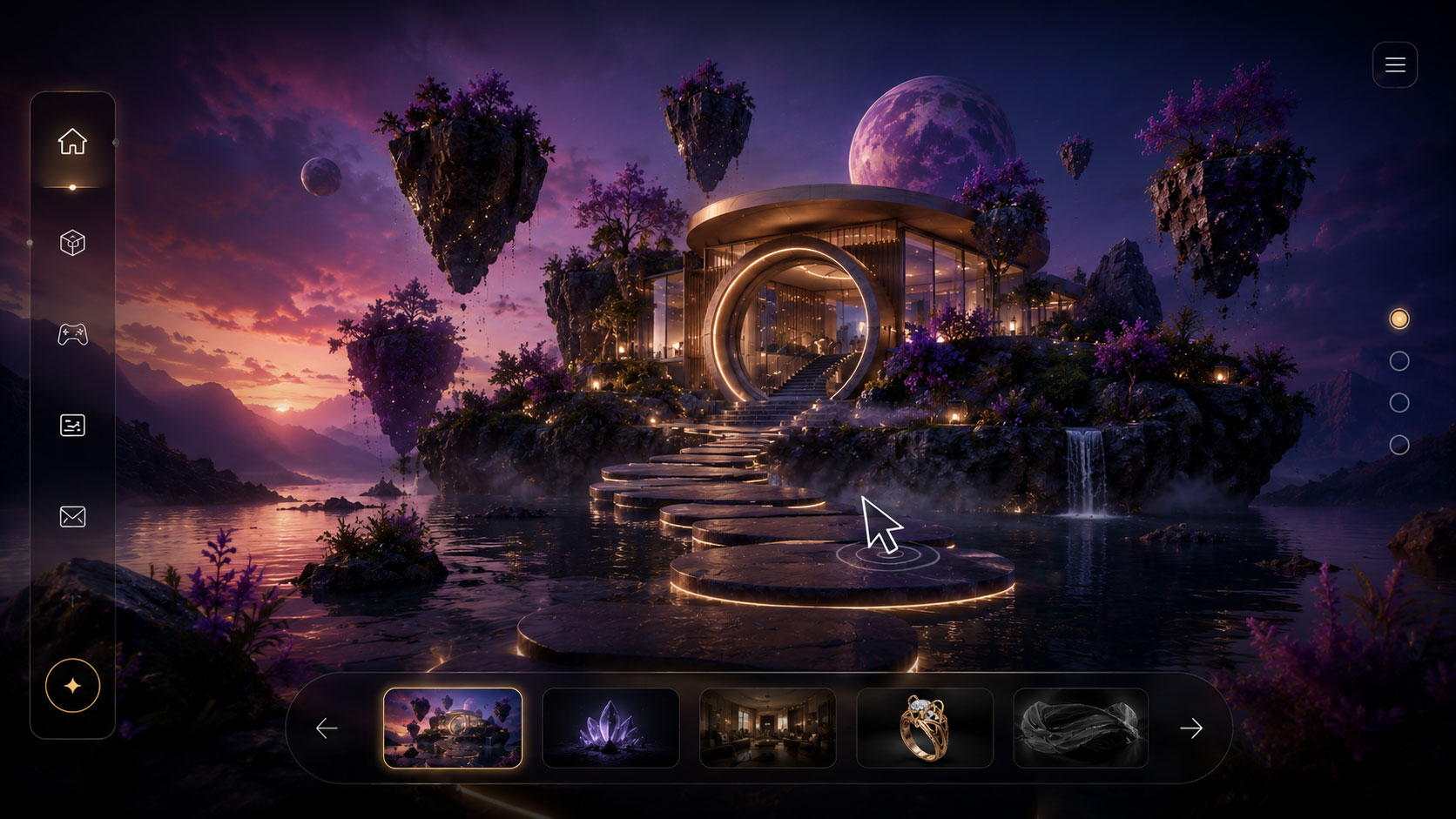
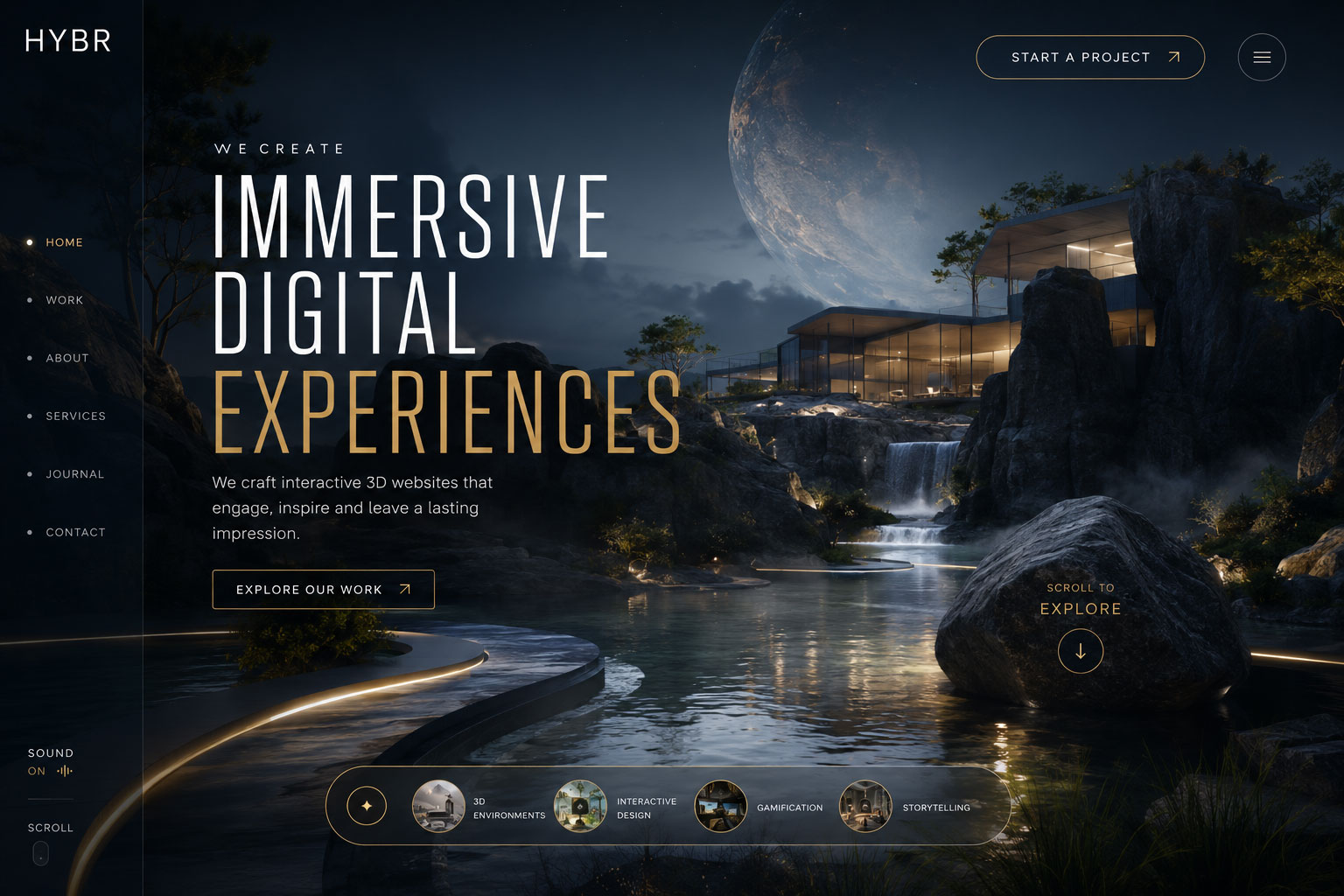
Interactive 3D websites allow brands to move beyond information delivery and create environments that users can actively explore.
Instead of scrolling through a page, visitors enter a digital space. Instead of reading a story, they experience it.
Why Interactive 3D Experiences Are Growing
Several technological developments have accelerated the growth of immersive web experiences.
- Faster internet speeds
- More powerful mobile devices
- Modern WebGL technologies
- Improved browser performance
- Advances in real-time rendering
What once required expensive software installations can now run directly inside a browser.
As a result, brands can create digital experiences that combine storytelling, interaction, animation, and spatial design without requiring users to download anything.
The website becomes more than a marketing asset. It becomes a destination.
The Power of Exploration
One of the biggest advantages of interactive 3D websites is the sense of discovery they create.
Traditional websites guide users through predetermined pathways. Visitors typically move from one page to another following menus and buttons.
Immersive experiences encourage exploration.
- Navigate digital environments
- Interact with objects
- Reveal hidden content
- Trigger animations
- Unlock narrative elements
- Discover products naturally
This process creates a deeper level of engagement because users become active participants rather than passive viewers.
The result is increased attention, stronger emotional connection, and higher information retention.
Brand Storytelling in Three Dimensions
Storytelling has always been one of the most powerful marketing tools.
Interactive 3D experiences expand storytelling beyond words and images.
Brands can build entire worlds around their identities.
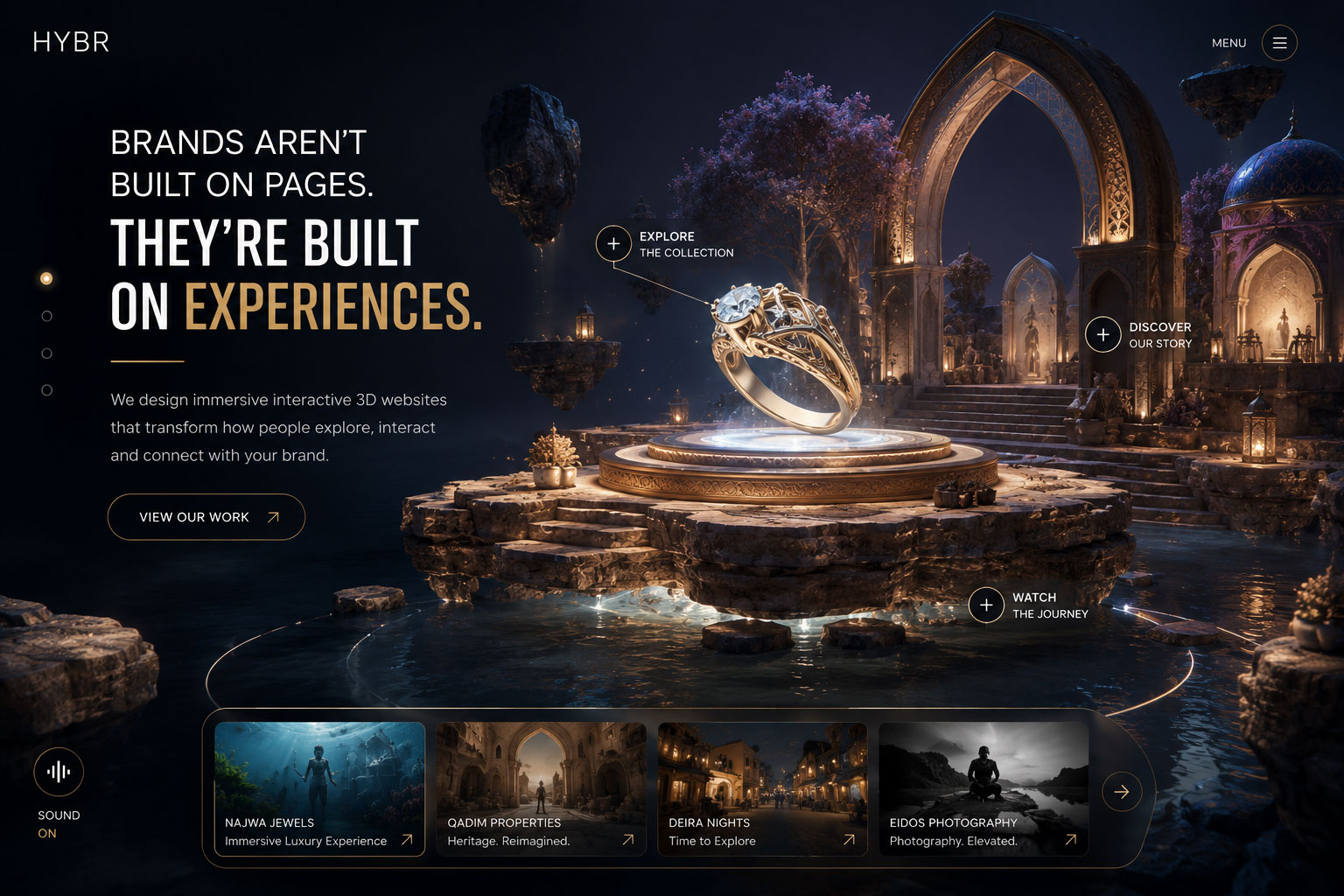
A luxury jewelry brand might create an underwater city filled with hidden treasures. A tourism campaign could allow visitors to explore a digital version of a destination. A real estate developer might invite users to journey through a cultural narrative that reveals properties organically along the way.
Instead of explaining a brand, immersive experiences allow users to experience it firsthand.
This creates stories that are remembered long after the visit ends.
Why Luxury Brands Are Embracing Interactive Experiences
Luxury brands have been among the earliest adopters of immersive digital experiences.
This is because luxury has always relied on atmosphere, emotion, and exclusivity. Traditional websites often struggle to communicate these qualities.
Interactive 3D experiences offer an alternative.
- Digital showrooms
- Interactive product journeys
- Immersive storytelling environments
- Personalized discovery experiences
- Cinematic brand worlds
Rather than presenting products as items on a page, brands can place them within meaningful contexts that strengthen their perceived value.
Interactive Design and Customer Engagement
One of the strongest arguments for interactive 3D websites is their impact on engagement.
Users generally spend more time exploring immersive environments than browsing traditional websites.
This increased engagement creates opportunities for:
- Stronger brand recall
- Better product understanding
- Higher interaction rates
- Increased sharing behavior
- Improved customer loyalty
When users actively participate in an experience, they form stronger memories of the brand behind it.
The Future of E-Commerce and Product Discovery
Interactive 3D websites are also reshaping how products are discovered online.
Traditional e-commerce often relies on product grids, search filters, and static photography.
Immersive experiences introduce a different approach. Products become part of a larger narrative.
Customers may discover items through:
- Interactive journeys
- Digital environments
- Personalized recommendations
- Gamified experiences
- Story-driven exploration
This transforms shopping from a transaction into an experience.
The Role of Gamification
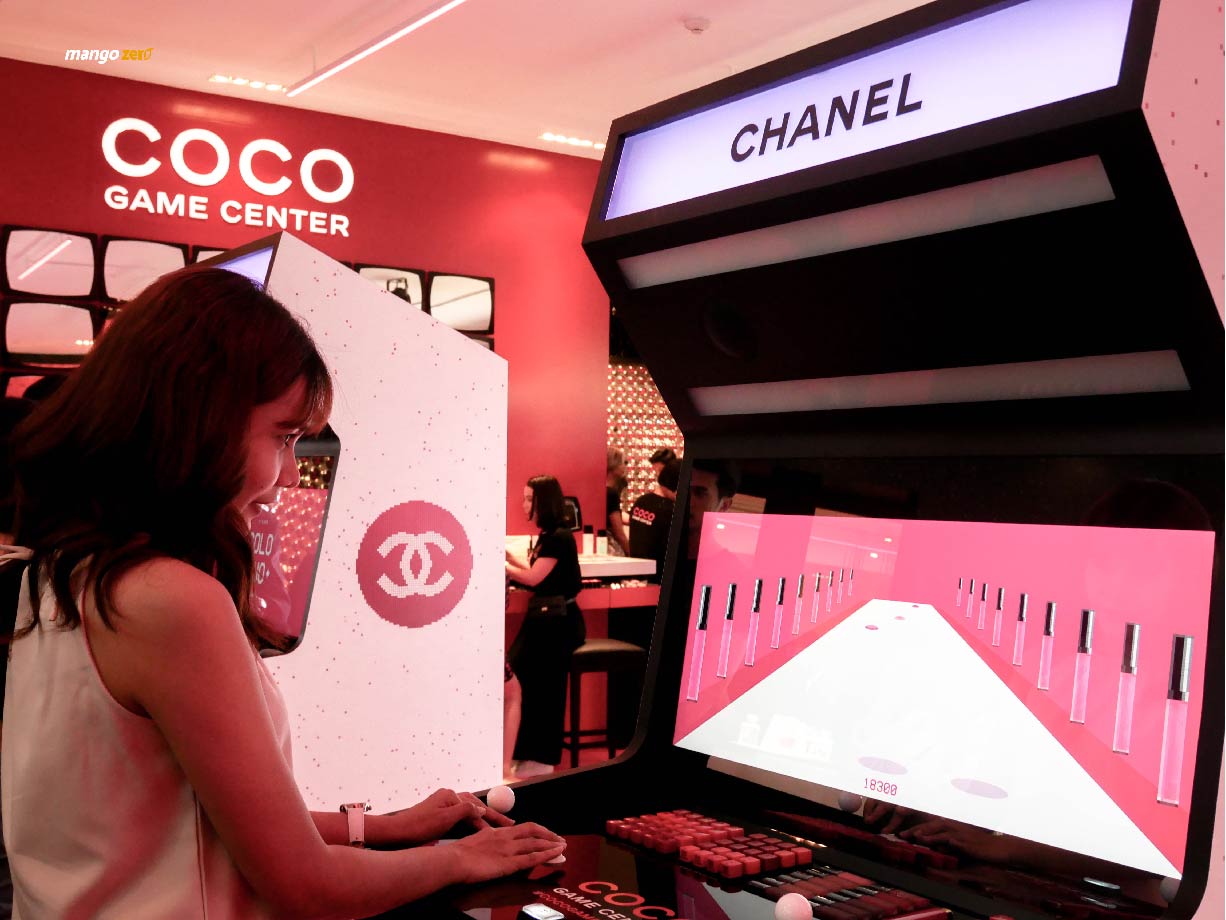
Many immersive websites are enhanced through gamification.
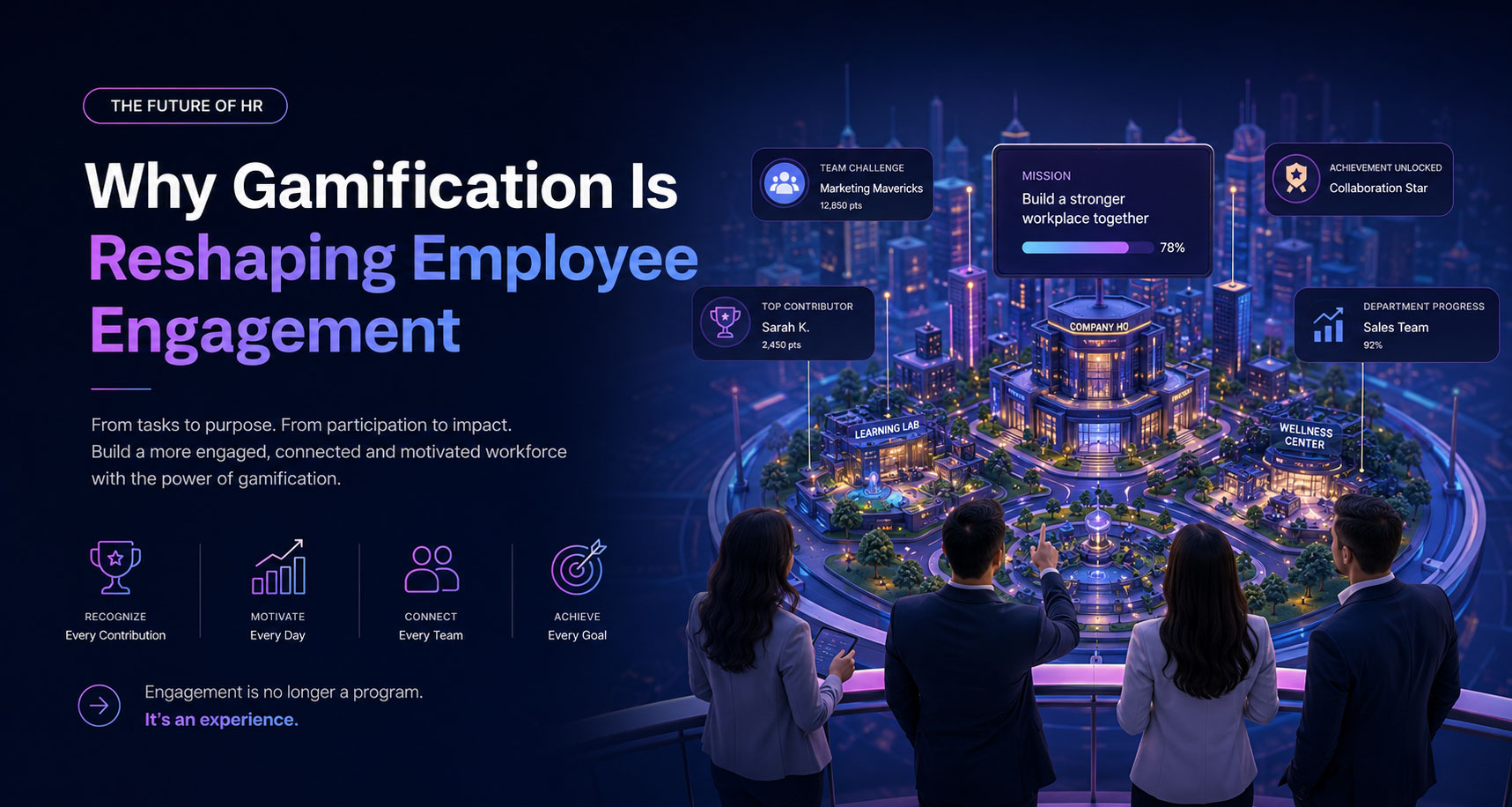
By introducing interactive mechanics such as challenges, progress systems, rewards, exploration objectives, and collectibles, brands can encourage users to spend more time engaging with content.
Gamification adds a layer of participation that transforms browsing into interaction.
Interactive 3D Websites in the GCC and Middle East
The Middle East is particularly well positioned for the growth of immersive digital experiences.
Across the UAE, Saudi Arabia, and the wider GCC region, governments and businesses are investing heavily in digital transformation, innovation, tourism, entertainment, and smart city initiatives.
At the same time, audiences increasingly expect premium digital experiences that reflect the region's ambition and creativity.
Interactive 3D websites provide a powerful way for brands to combine technology, storytelling, and cultural identity.
Examples of Immersive Digital Experiences
At Hybr Creative, we see immersive web experiences as a new category of brand engagement.
Explore some of our projects:
Eidos Photography
An immersive 3D photography portfolio experience.
Najwa Jewels
A gamified storytelling experience blending luxury branding with interactive exploration.
QADIM Properties
An immersive cultural real estate experience inspired by Mesopotamian heritage.
Deira Nights
A gamified tourism and cultural storytelling experience.
The Future of Digital Brand Experiences
Interactive 3D websites are not simply a design trend.
They represent a broader shift in how brands communicate online.
As audiences become more accustomed to immersive environments, traditional websites will increasingly struggle to hold attention.
Future digital experiences will likely combine:
- Interactive 3D environments
- AI personalization
- Gamification
- Real-time content adaptation
- Immersive storytelling
The brands that embrace these technologies today will be better positioned to build stronger relationships with tomorrow's audiences.
Final Thoughts
The rise of interactive 3D websites marks a significant evolution in digital communication.
Consumers are no longer satisfied with static pages and predictable experiences. They expect environments they can explore, stories they can participate in, and brands they can interact with.
For forward-thinking organizations, immersive web experiences offer an opportunity to create deeper engagement, stronger emotional connections, and more memorable brand interactions.
The future of digital branding will not be built around pages.
It will be built around experiences.
Related Articles



HYBR
Creative

