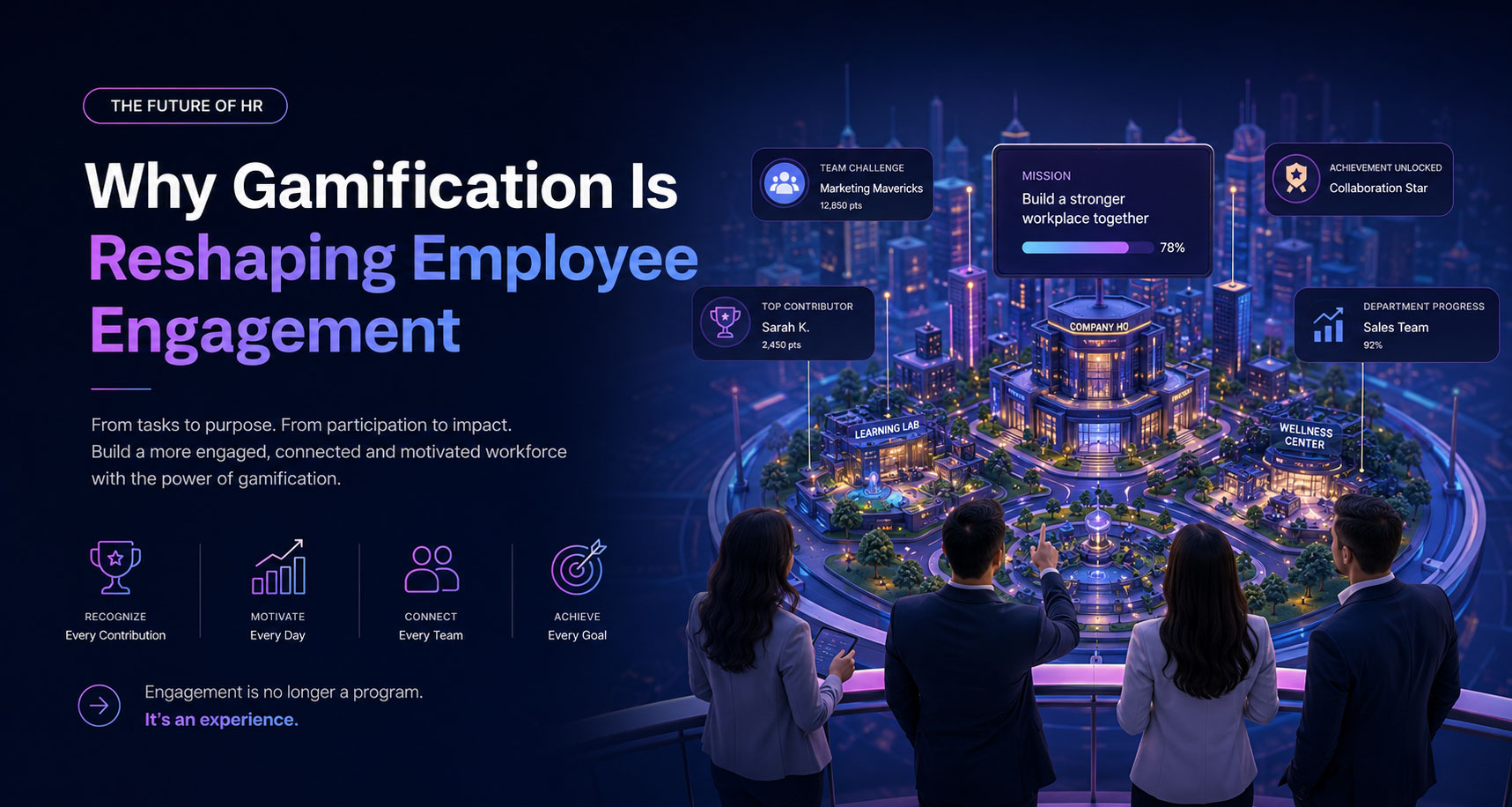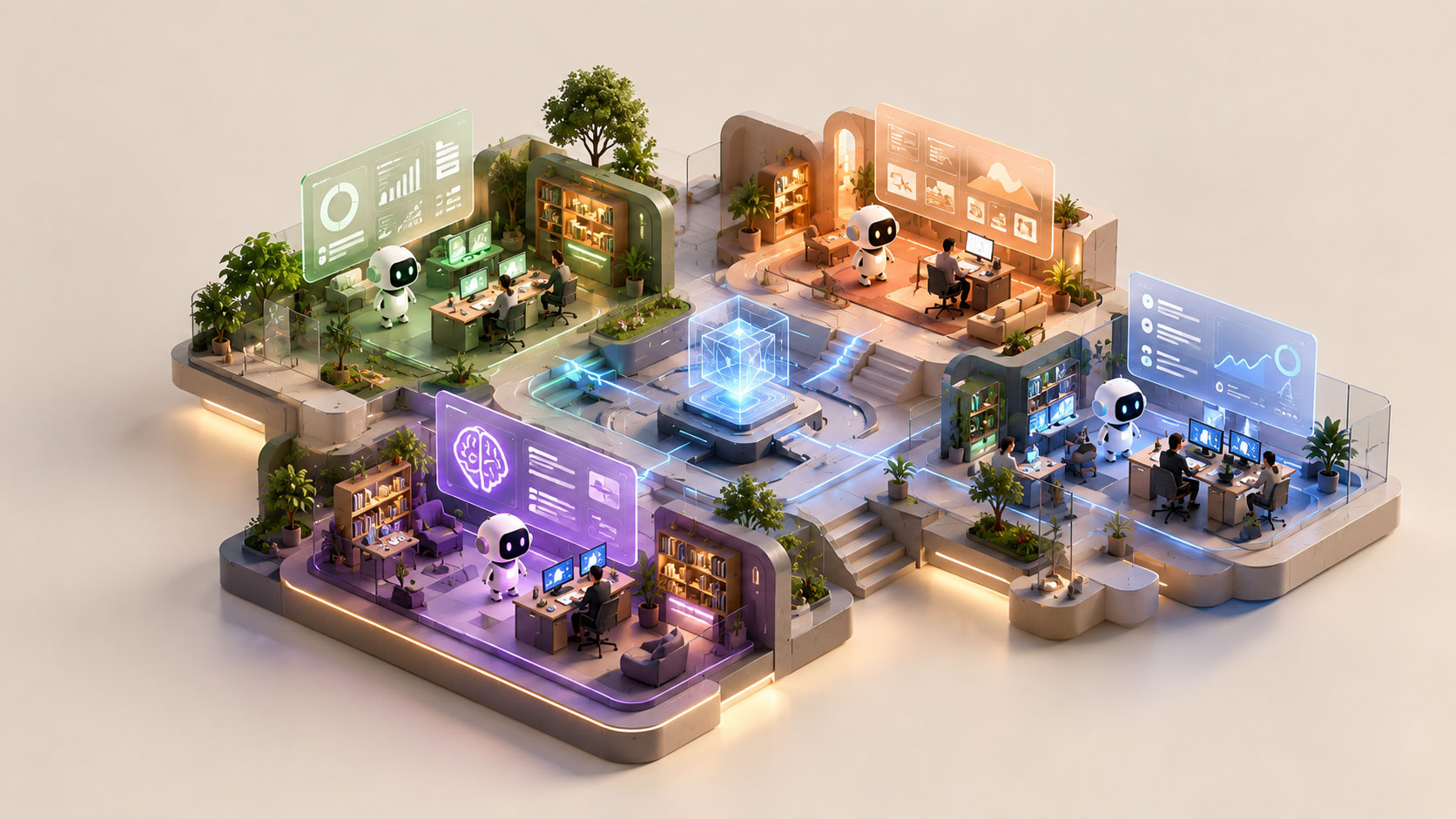
From AI Dashboards to Interactive Worlds: Gamifying the AI Agent Experience
AI agents are changing how companies operate. They can manage emails, conduct research, generate content, process customer requests, automate workflows, and collaborate with employees.
Yet despite these advancements, the way we interact with AI agents has barely changed.
Most AI platforms still rely on traditional dashboards: tables, status indicators, chat windows, task lists, and activity logs.
These interfaces may be functional, but they rarely reflect the intelligence, complexity, or dynamic nature of the systems behind them.
What if we approached AI agent interfaces differently?
What if managing a network of AI agents felt less like operating enterprise software and more like navigating an interactive world?
This is where gamification, immersive design, and interactive environments introduce an exciting opportunity for businesses developing AI-powered products.
The Next Challenge for AI Products Is User Experience
For the past few years, much of the AI industry's attention has focused on improving models, expanding capabilities, and developing increasingly autonomous agents.
But as AI technology becomes more accessible, another challenge is emerging: user experience.
Companies may have powerful AI agents capable of completing complex operations, yet their users still need to understand what those agents are doing, how they interact, and when human intervention is necessary.
Traditional dashboards present this information through separate screens and data structures.
A user might need to navigate several pages to understand the progress of a single workflow.
As the number of agents increases, so does the complexity of managing them.
The next competitive advantage for AI products may not come exclusively from building smarter agents.
It may come from creating better environments for people to interact with them.
What Does It Mean to Gamify an AI Agent Dashboard?
Gamifying an AI agent dashboard does not mean simply adding points, badges, or rewards.
It means applying principles from game design to make complex digital operations more understandable, engaging, and intuitive.
Imagine replacing a conventional agent management dashboard with an interactive environment.
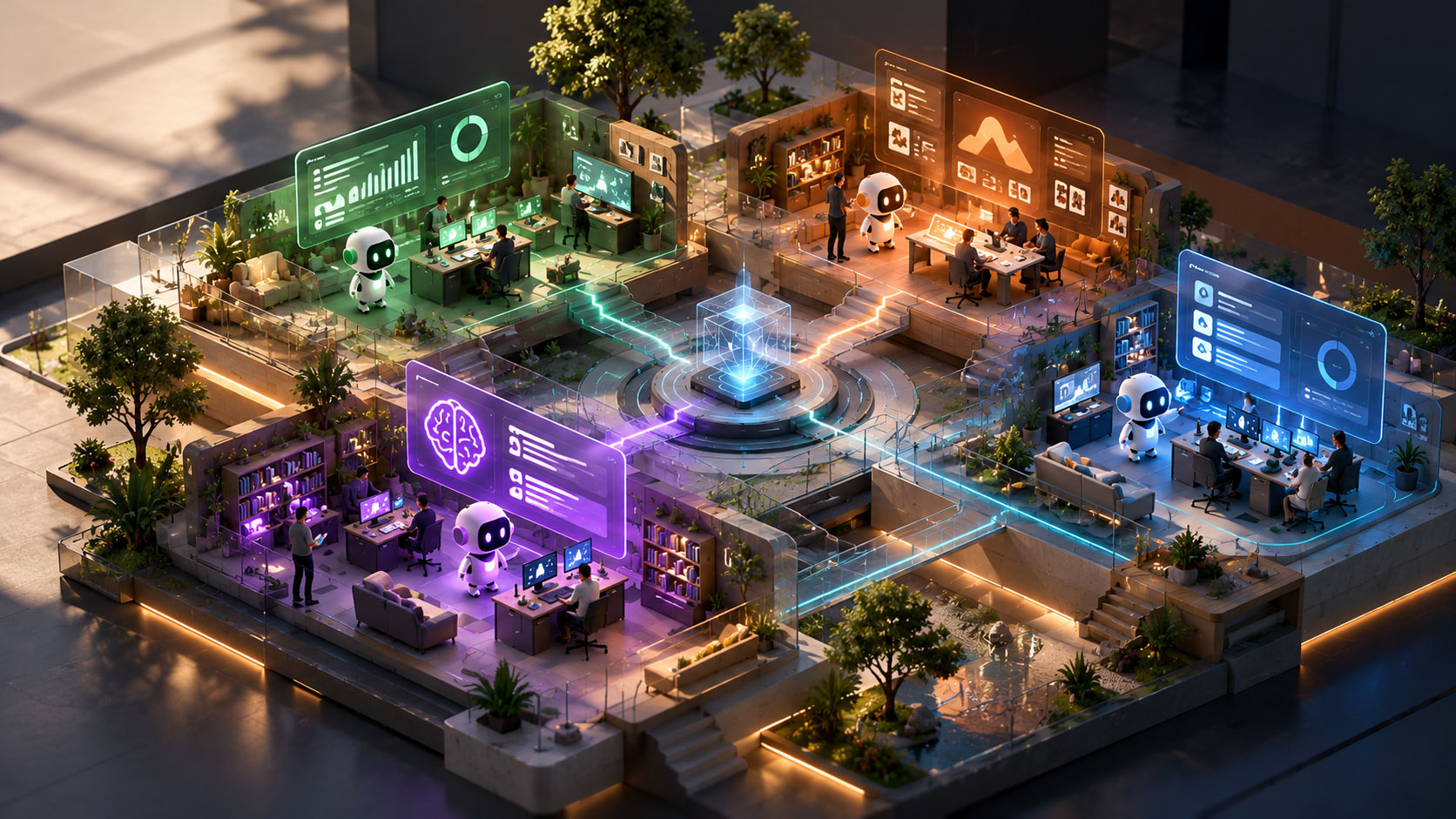
Each AI agent has a recognizable identity. Departments become distinct spaces. Tasks appear as objectives. Workflows become visible connections. Completed operations create immediate feedback.
Users can explore the environment, interact with agents, monitor progress, and intervene when necessary.
Instead of interpreting dozens of disconnected indicators, users can understand their organization's activity through a coherent visual system.
The underlying AI technology remains the same.
What changes is the experience of interacting with it.
Why Game Design Offers a Better Way to Visualize Complex Systems
Strategy games, management simulations, and virtual worlds have spent decades developing interfaces that make complicated systems easier to navigate.
Consider a city-building game.
The player manages resources, infrastructure, workers, development, and multiple simultaneous activities.
Yet much of this information is communicated through a single interactive environment.
Buildings communicate functions. Characters represent activities. Animations provide feedback. Visual changes communicate progress.
The player does not need to open a spreadsheet every time something happens.
These design principles can be applied to AI agent management.
For example, a company operating sales, marketing, research, and customer support agents could visualize them as different teams within a shared digital environment.
A research agent completing an assignment could trigger a visible update.
A sales agent waiting for human approval could display an attention indicator.
An overloaded department could communicate its workload through visual changes.
The goal is not decoration.
It is to create a more understandable relationship between the user and the system.
Your Existing AI Agents Don't Need to Change
One of the most interesting opportunities is that companies may not need to rebuild their AI infrastructure to explore gamified interfaces.
An organization might already have AI agents running through custom applications, automation platforms, APIs, or internal systems.
These agents may be performing their tasks successfully.
The challenge is how their activities are presented to users.
A gamified interface can potentially operate as an additional experience layer, connected to the existing system through available APIs, events, and data integrations.
Existing AI infrastructure continues to handle agents, workflows, automation, and data.
An integration layer communicates statuses, events, permissions, and available actions.
The gamified experience layer transforms that information into interactive worlds, recognizable agent identities, missions, and visual progress.
This approach allows businesses to preserve their existing technology while exploring a more engaging front-end experience.
Depending on the system, the interface could range from a lightweight interactive dashboard to a complete 2D or 3D digital workspace.
The result is not necessarily a new AI product.
It can be a new way to experience an existing one.
Five Ways to Transform an AI Dashboard into a Gamified Experience
There is no single visual approach that works for every AI product. The right experience depends on the number of agents, the complexity of the workflows, and the needs of the users.
However, several game-inspired design principles can be especially valuable.
1. Give AI Agents Visual Identities
Instead of representing every agent as a name in a list, assign recognizable visual identities based on their roles and capabilities.
An email agent, research agent, and analytics agent could have different appearances, locations, and interaction patterns.
This helps users distinguish agents and understand their responsibilities.
2. Turn Workflows into Interactive Journeys
Traditional workflow diagrams often require users to interpret nodes, arrows, and technical conditions.
A gamified experience can present the same process as an interactive journey.
Users could follow a task as it moves between agents, departments, and approval stages.
3. Make Progress Visible
Progress bars, changing environments, completed objectives, and animated transitions can communicate how work is advancing.
Instead of repeatedly checking whether a task has finished, users receive visual feedback when meaningful events occur.
4. Create Interactive Departments and Spaces
For products managing multiple agents, spatial organization can make the system easier to understand.
A marketing department could contain content, research, and campaign agents.
A customer support area could display incoming requests and active support agents.
Each space becomes a recognizable part of the broader system.
5. Introduce Meaningful Achievements and Objectives
Gamification can also encourage users to explore capabilities, complete onboarding steps, configure useful workflows, or achieve operational milestones.
These mechanics should support genuine user goals rather than reward meaningless activity.
The best gamified systems make work clearer and more satisfying without adding unnecessary complexity.
From AI Tools to Interactive Digital Workspaces
The opportunity becomes even more interesting when AI agents work alongside human employees.
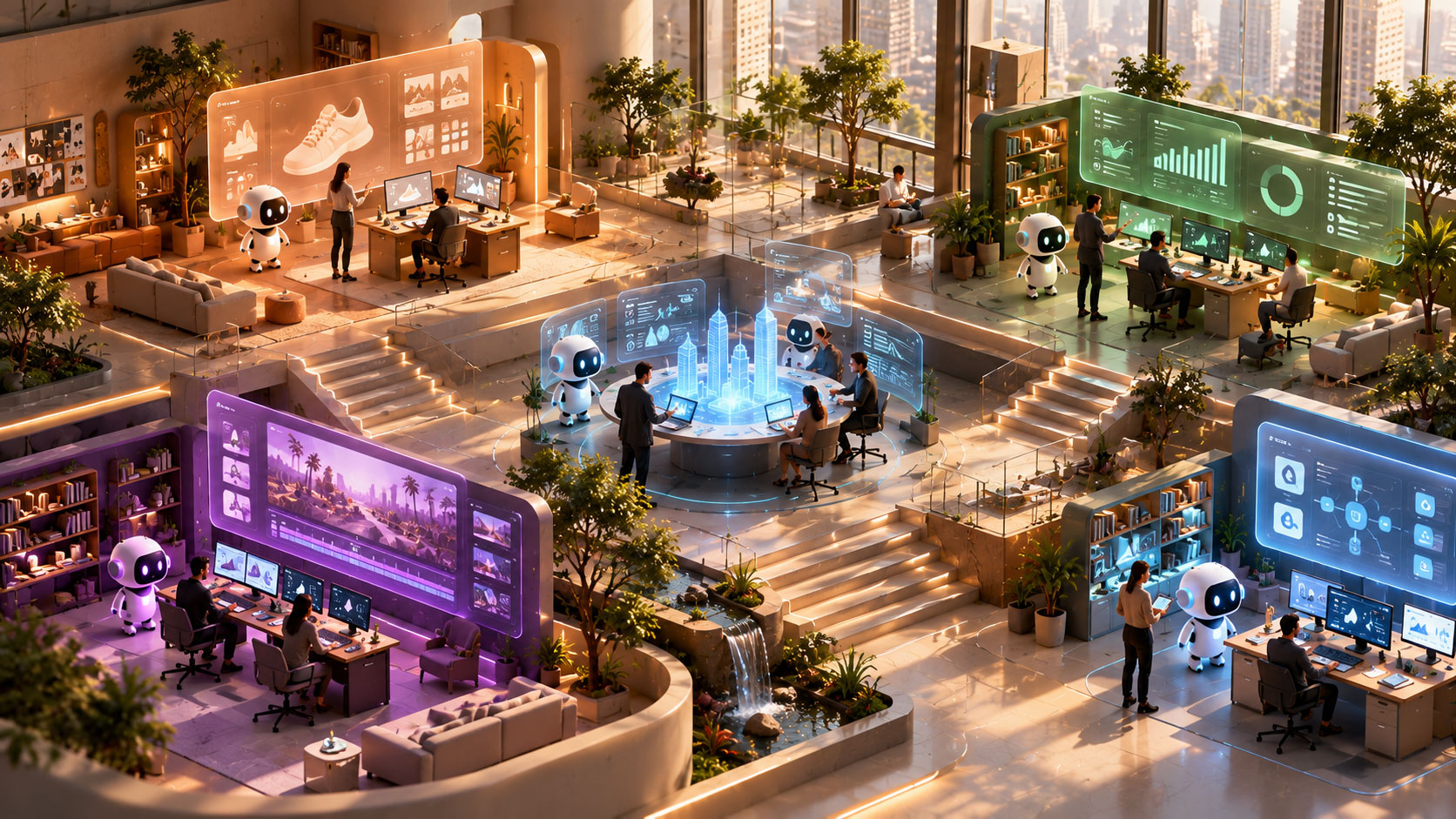
Imagine an interactive company environment where both people and agents are represented within the same organizational structure.
A human project manager assigns a task.
An AI research agent gathers information.
A human strategist reviews the findings.
An AI content agent prepares initial materials.
A creative director approves the final output.
Instead of switching between multiple dashboards, the team could follow these relationships inside one interactive environment.
This could create a more accessible way to understand collaboration, responsibilities, dependencies, and organizational progress.
It also suggests a broader direction for business software: moving from disconnected interfaces toward interactive representations of how organizations actually operate.
Why AI Startups Should Consider Gamified Experiences
For AI startups and SaaS companies, interface design is more than an aesthetic decision.
It influences how users understand the product, discover its capabilities, and incorporate it into their daily routines.
A thoughtfully designed gamified experience could create several advantages.
- Product differentiation: In a market where many AI products use similar dashboard layouts, an interactive experience can create a more distinctive identity.
- Better product understanding: Visual relationships can help users understand complex agent workflows without navigating multiple technical screens.
- Stronger onboarding: Interactive guidance can introduce users to agent capabilities through exploration and practical objectives.
- More memorable demonstrations: An interactive environment can communicate a product's value during investor presentations, sales meetings, and product launches.
- Potentially stronger engagement: Clear feedback, visible progress, and intuitive navigation may encourage users to explore and return to the product, provided the experience genuinely improves usability.
These advantages should be evaluated through user testing rather than assumed. Gamification is most effective when it solves a real interaction problem.
How Hybr Creative Can Help Gamify Your AI Product
At Hybr Creative , we specialize in immersive web experiences, interactive 3D environments, and gamified digital products.
We believe the next generation of AI software presents an opportunity to apply these capabilities beyond traditional marketing and entertainment.
AI startups, SaaS companies, and businesses developing internal AI systems can benefit from exploring more visual, interactive ways to present their technology.
Our approach begins with understanding the existing product: its agents, workflows, users, and data relationships.
From there, we can explore how those systems might translate into an interactive experience.
Depending on the project's requirements, this could include:
- Gamified AI agent dashboards and control centers.
- Interactive 2D or 3D organizational environments.
- Visual agent identities and workflow representations.
- Game-inspired progress, feedback, and interaction systems.
- Custom interactive interfaces connected to existing AI infrastructure.
The objective is not to replace your AI technology.
It is to make that technology easier to see, understand, navigate, and interact with.
Whether you're developing an AI agent platform, an internal automation system, or a new AI-powered SaaS product, an immersive experience could become a distinctive part of how people understand and use it.
Your AI Agents Are Already Smart. What About Their Interface?
Explore how Hybr Creative can transform your existing AI agents and workflows into a custom gamified experience.
Discuss Your AI Project → Explore Hybr Creative →The Future of AI Interfaces Is an Experience Design Challenge
AI agents are becoming increasingly capable, but the interfaces surrounding them have considerable room to evolve.
As businesses deploy more agents and build increasingly complex workflows, the need for clear, intuitive interaction will only grow.
Not every AI dashboard needs a virtual city, an avatar, or a game-like world.
But many could benefit from the principles that make interactive experiences so effective: spatial organization, immediate feedback, meaningful progression, recognizable identities, and user participation.
The next generation of AI products may be defined not only by what their agents can accomplish, but also by how naturally people can work with them.
Final Thoughts
We have spent years teaching AI systems how to understand human instructions.
Perhaps it is time to spend more effort making AI systems easier for humans to understand.
Gamification offers one promising direction.
For AI companies, this creates an opportunity to transform existing dashboards into more engaging, distinctive, and understandable digital experiences.
And for experience design studios like Hybr Creative, it opens a new frontier: designing the environments through which people will interact with intelligent systems.
The future of AI is not only about smarter agents. It is also about better worlds for working with them.
Ready to Rethink Your AI Dashboard?
Discover how immersive web experiences, gamification, and interactive 3D design could transform your AI-powered product.
Start a Conversation → Explore a Gamified Platform Example →