AI agents are becoming an increasingly important part of how companies operate.
They conduct research, generate content, analyze data, communicate with customers, and automate workflows. Human employees are beginning to work alongside digital agents as part of the same organizational structure.
But while the way we work is changing, the digital workspaces we use have remained relatively familiar.
Dashboards, spreadsheets, task lists, chat windows, and disconnected applications still define much of our experience of managing work.
What if we could approach digital workspaces differently?
What if your employees, AI agents, tasks, projects, and workflows could exist together inside an intelligent, interactive world?
This is where gamification, AI, and immersive experience design could introduce a new direction for workplace software.
Why AI Agents Need More Than Traditional Dashboards
Most AI agent dashboards are designed to display information. They show agent activity, task statuses, performance metrics, and automation logs.
These interfaces are useful, but as companies introduce more AI agents into their operations, understanding the relationships between them becomes increasingly important.
- Which AI agents are working on which projects?
- Which employees are collaborating with them?
- Which tasks require human approval?
- Where are delays and dependencies appearing?
- How does each activity contribute to the company's objectives?
Answering these questions can require navigating multiple applications and interpreting different types of information.
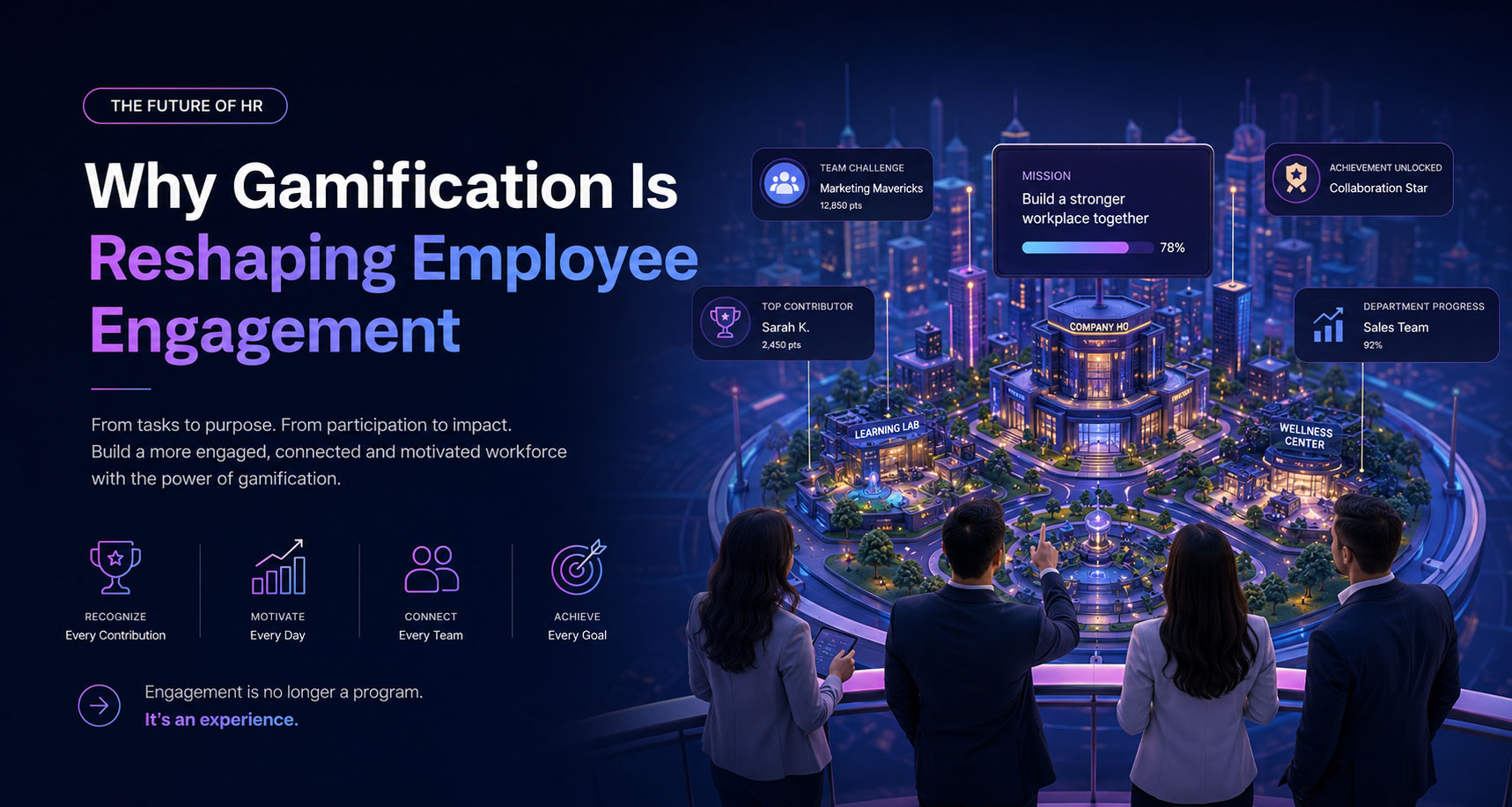
Gamification offers an opportunity to make this complexity easier to understand through visual identities, spatial organization, interactive environments, and meaningful feedback.
Instead of simply monitoring AI agents, users could explore how they participate in the organization.
What Is a Gamified AI Workspace?
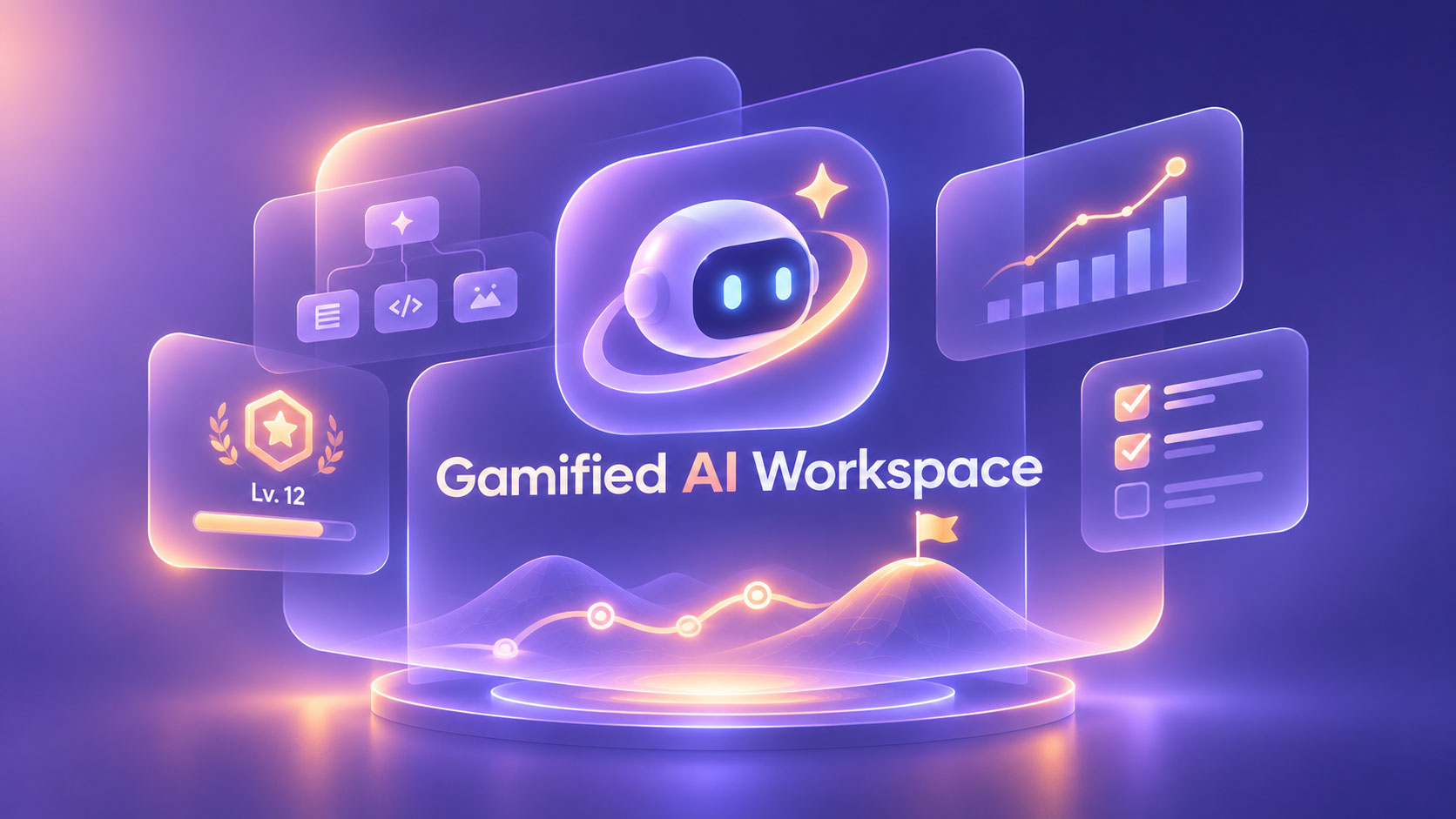
A gamified AI workspace applies principles from game design and interactive experience design to the digital workplace.
It is not necessarily a game. It does not need to reward employees with points or introduce competition into everyday work.
Instead, it transforms the way organizational information is represented and experienced.
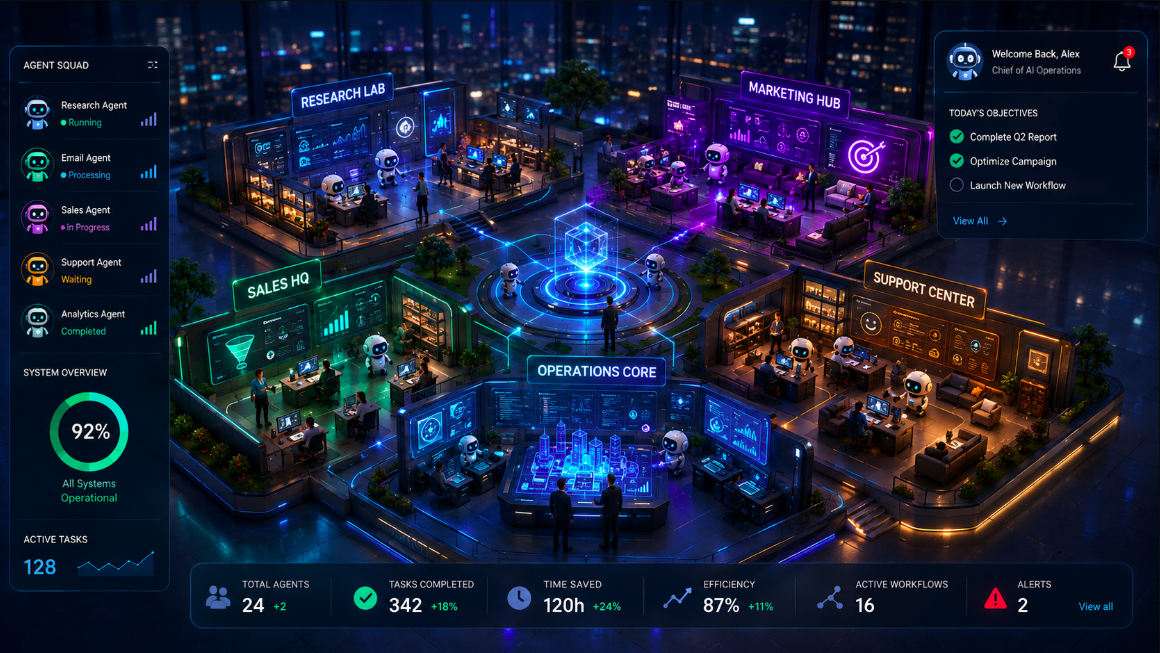
Imagine opening your company's workspace and entering an interactive environment where:
- Employees have recognizable avatars and responsibilities.
- AI agents have distinct visual identities and capabilities.
- Tasks appear as interactive objectives.
- Projects have their own dedicated spaces.
- Workflows are represented through meaningful connections.
- The environment responds to real organizational progress.
The company becomes something you can see, explore, and interact with, rather than something you understand only through reports and dashboards.
Why Game Design Could Transform AI Agent Management
Strategy games and management simulations have spent decades exploring how to make complicated systems understandable through interactive environments.
A player can observe multiple characters, activities, resources, objectives, and dependencies within a single visual experience.
Locations communicate purpose. Characters communicate responsibilities. Animations communicate activity. Changes in the environment communicate progress.
These principles could be applied to AI agent management and digital workspaces.
A research agent completing an assignment could trigger a visible change. A task requiring human approval could display an attention indicator. A project approaching completion could gradually transform its environment.
The goal is not to make enterprise software look like a video game.
The goal is to use game design as a methodology for making complex work more intuitive.
Human Employees and AI Agents in One Interactive Environment
One of the most interesting possibilities of workplace gamification is representing human employees and AI agents within the same digital environment.
Consider a marketing agency developing a campaign for a client.
A project manager defines the objectives. An AI research agent analyzes the market. A creative strategist reviews the findings. An AI content agent develops initial ideas. Designers prepare campaign materials. An analytics agent monitors performance.
Each participant contributes to the same project, but their activities may exist across several disconnected applications.
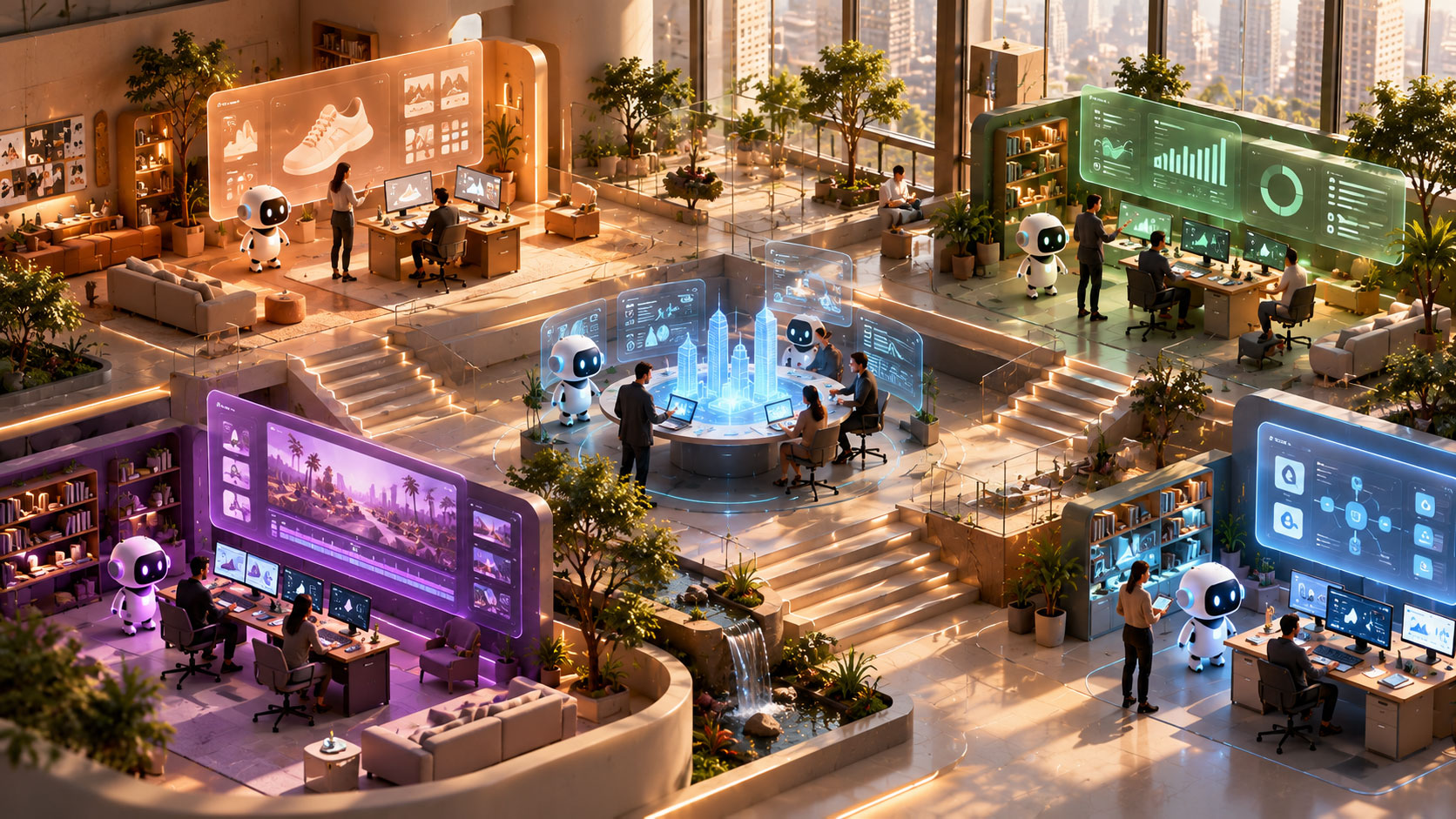
Within a gamified AI workspace, these relationships could become part of a single interactive environment.
Managers could explore responsibilities, employees could understand how their work connects to others, and teams could see where AI agents contribute to the project.
Rather than separating people and artificial intelligence into different interfaces, the workspace could represent how they actually work together.
Gamify Your AI Agents, Employees & Workspace
Discover a new way to visualize, explore and interact with your company's people, AI agents, projects and workflows.
Explore Gamified AI Workspace →Currently in development by Hybr Creative.
From Company Worlds to Project Worlds
What if a digital workspace was not limited to one environment?
An organization could have a permanent Company World representing its employees, AI agents, departments, and ongoing activities.
Individual projects could have their own temporary worlds, bringing together the specific people, agents, tasks, and resources involved.
Company Worlds
A Company World could provide a recognizable representation of the organization as a whole.
Users could navigate between areas, explore responsibilities, observe ongoing activities, and understand relationships across the company.
Project Worlds
A Project World could represent a specific client assignment, marketing campaign, product launch, or internal initiative.
As tasks are completed and milestones are achieved, the environment could evolve.
When the project finishes, its world could be archived while remaining connected to the organization's history.
This approach introduces a spatial way of organizing work that goes beyond conventional project management interfaces.
Your Existing AI Agents and Tools Could Stay Connected
Gamification does not necessarily require companies to replace their existing AI infrastructure.
Many organizations already use AI agents, automation platforms, internal applications, and project management software.
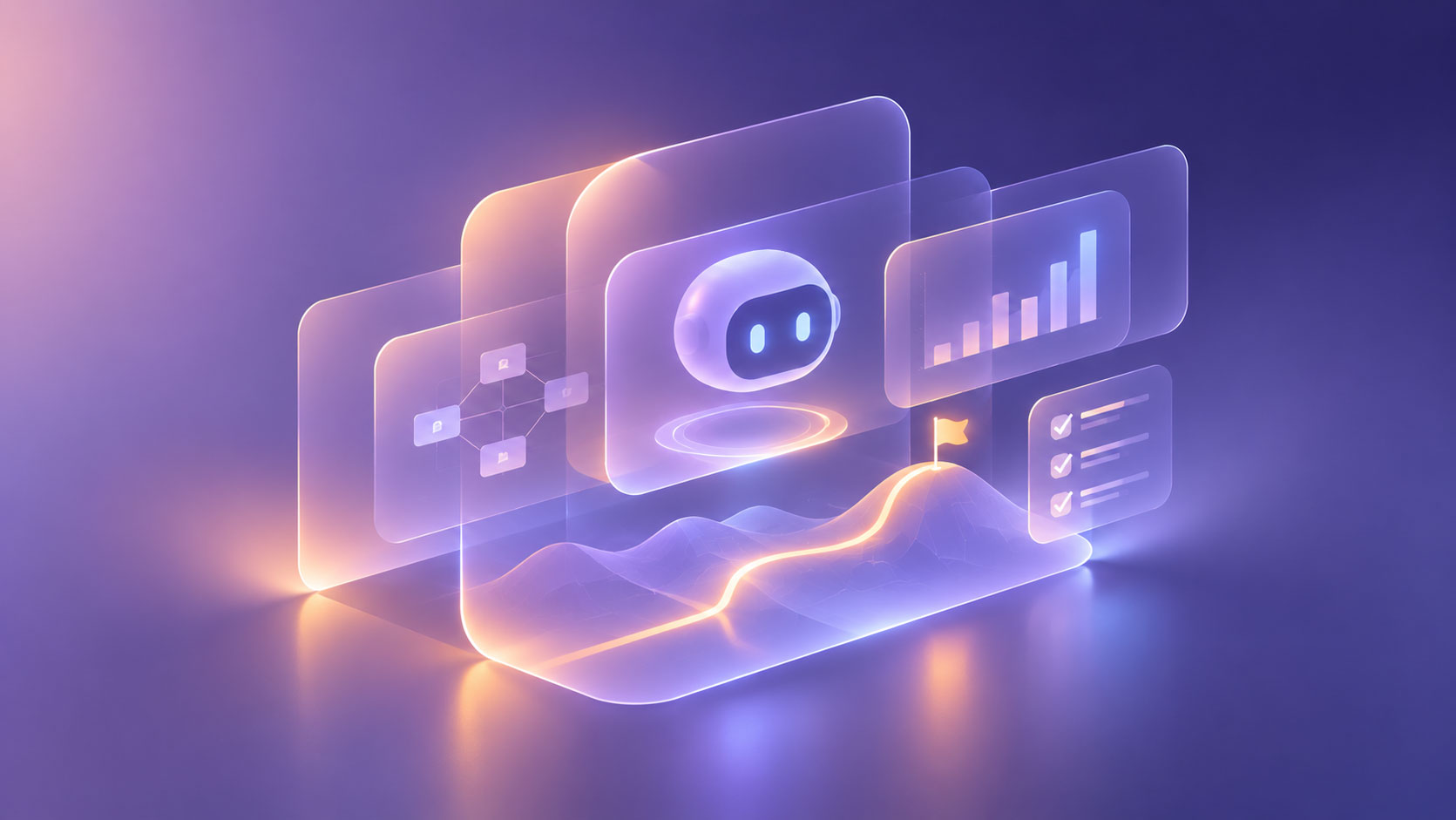
A gamified AI workspace could operate as an intelligent experience layer connected to these existing systems through appropriate APIs and integrations.
The underlying tools would continue performing their functions, while the interactive environment would provide a different way of understanding and accessing relevant information.
Instead of introducing another disconnected application, the objective would be to create a connected visual layer across the organization's digital operations.
Combining Natural Language With Spatial Interfaces
Natural-language interaction is becoming an important part of AI-powered software.
However, a conversation with an AI assistant does not always provide a complete overview of a complex organization.
Interactive worlds could complement conversational interfaces by giving their responses visual and spatial context.
Imagine entering instructions such as:
- "Show me what our research agents are working on."
- "Which projects require my attention?"
- "Show the employees involved in this campaign."
- "Which tasks are waiting for approval?"
Rather than receiving only a written response, the workspace could highlight relevant characters, tasks, relationships, and project areas.
Natural language becomes a method of interacting with the world, while the environment provides a way to understand the response.
Customizable 2D and Immersive 3D Workspaces
Different organizations have different identities, structures, and ways of working.
There is no reason their digital workspaces should all look the same.
A creative agency might choose a minimal isometric environment. A technology company might prefer a futuristic digital landscape. Another organization might use an abstract world focused on relationships and operational activities.
The same organizational information could potentially be represented through different visual styles, characters, environments, and interaction systems.
Some users might prefer lightweight 2D workspaces, while others might explore their organization through immersive 3D environments.
Customization could allow companies to create digital experiences that reflect their identity without changing the underlying structure of their work.
Gamification Is About Understanding Work, Not Playing With It
Workplace gamification is often associated with points, badges, rewards, and leaderboards.
But these are only a small part of what game design can offer.
Clear objectives, intuitive navigation, visual feedback, recognizable identities, and meaningful progression can all contribute to better digital experiences.
Applied thoughtfully to AI agent management, these principles could make organizational complexity more accessible without introducing unnecessary distractions.
The real opportunity is not to gamify every task.
It is to gamify the experience of understanding and interacting with work.
Introducing Gamified AI Workspace by Hybr Creative
At Hybr Creative, we are exploring the intersection of AI, gamification, immersive design, and interactive web experiences.
We are currently developing Gamified AI Workspace, a new product concept designed to transform organizational information into intelligent, customizable, interactive worlds.
Our vision is to enable companies to:
- Connect their existing employees, AI agents, tasks, and tools.
- Experience their organization through interactive environments.
- Visualize responsibilities, relationships, and workflows.
- Create dedicated worlds for projects and campaigns.
- Interact with work through natural language and visual interfaces.
- Customize how their digital workspace looks and feels.
The product is currently in development. Our initial focus is on visual prototypes that explore how interactive worlds could represent companies and their activities.
We are interested in connecting with businesses, AI startups, and organizations exploring the future of human-AI collaboration.
The Future of Digital Workspaces
As artificial intelligence becomes more integrated into organizations, workplace software may need to evolve alongside it.
Traditional dashboards will remain valuable for detailed analytics, configuration, and precise operational controls.
But they do not have to define the entire experience of digital work.
Gamified AI workspaces introduce another possibility: environments where people can understand relationships, observe activities, explore projects, and interact with both human and AI participants.
Perhaps the future of workplace software is not another collection of dashboards.
Perhaps it is a world you can explore.
What If Your Company Was a World You Could Explore?
Discover our vision for the next generation of gamified AI workspaces and register your interest.
Discover Gamified AI Workspace →